Men's Health.

I also echo the comments above wishing FHS good luck.

My family have made more use than I would like of the NHS over the last couple of years and bar a couple of gripes, they have been superb. Hard working staff and actually pretty good facilities.

We are very lucky.
Thank you.
 
Not sure what you're referring to in your comment; general or specific.

As someone who yesterday was diagnosed with skin cancer from a biopsy taken the previous day, the third time of meeting cancer in my life, I kind of like the lab confirmation of my doctor's assessment so that I can get early treatment.
Best of luck with your operation, had brilliant treatment from the operation through to skin checks for mine at Poole Hospital.
 
BBC

Experts expected to advise against screening most men for prostate cancer​


Most men would not be routinely tested for prostate cancer under expected recommendations from the expert group which advises the government and NHS on screening.

Instead, the UK National Screening Committee is expected to recommend only screening for men with the genetic variants BRCA1 and BRCA2 who are between the ages of 45 and 61.

There is currently no population-wide screening programme for prostate cancer in the UK. But some groups and high-profile individuals have been campaigning for changes - particularly for groups with a higher risk of getting prostate cancer.

NHS England says men may have a higher chance of getting prostate cancer if they are over 50, come from a black ethnic background, have a family history of the disease, or if a close relative has had breast or ovarian cancer.

The full details of the committee's report are due at 15:00. Stay with us as we bring you more.
I don’t understand this resistance to screening generally. I accept that screening more broadly requires investment but the medium to long term health benefit of such, together with what are likely to be significant cost savings to the NHS over time, make it an obvious and necessary way forward I would have thought.
 
BBC

Experts expected to advise against screening most men for prostate cancer​


Most men would not be routinely tested for prostate cancer under expected recommendations from the expert group which advises the government and NHS on screening.

Instead, the UK National Screening Committee is expected to recommend only screening for men with the genetic variants BRCA1 and BRCA2 who are between the ages of 45 and 61.

There is currently no population-wide screening programme for prostate cancer in the UK. But some groups and high-profile individuals have been campaigning for changes - particularly for groups with a higher risk of getting prostate cancer.

NHS England says men may have a higher chance of getting prostate cancer if they are over 50, come from a black ethnic background, have a family history of the disease, or if a close relative has had breast or ovarian cancer.

The full details of the committee's report are due at 15:00. Stay with us as we bring you more.
Seeing as the tests are not actually that reliable, it makes sense to only test those who at a higher risk unless other symptoms arise.
 
I don’t understand this resistance to screening generally. I accept that screening more broadly requires investment but the medium to long term health benefit of such, together with what are likely to be significant cost savings to the NHS over time, make it an obvious and necessary way forward I would have thought.
The resistance with the prostate tests is that they can false positive as well as miss cancer.
 
The resistance with the prostate tests is that they can false positive as well as miss cancer.
Targeted screening is probably the best option for the present
I posted some months ago that I was diagnosed with prostate cancer more than 7 years ago and chose active surveillance rather than surgery. After annual MRIs or biopsies my consultant thought I was pushing my luck as the cancer was growing but still within the prostate so yesterday went into Poole for Brachytherapy. After an overnight stay I’m back home - we will see in 3 months time if it’s done the trick!!
Fingers crossed for you!
 
Prevention is always better than cure, not to mention cheapest.

It makes sense to have targeted screenings (age, gender, genetics, general susceptibility) for all serious ailments. That is not only optimal for patient care but, surely, the best use of finite NHS resources.

I would like to see more attention paid to education on health issues and a shift of emphasis in favour of preventative medicine.
 
BBC

Experts expected to advise against screening most men for prostate cancer​


Most men would not be routinely tested for prostate cancer under expected recommendations from the expert group which advises the government and NHS on screening.

Instead, the UK National Screening Committee is expected to recommend only screening for men with the genetic variants BRCA1 and BRCA2 who are between the ages of 45 and 61.

There is currently no population-wide screening programme for prostate cancer in the UK. But some groups and high-profile individuals have been campaigning for changes - particularly for groups with a higher risk of getting prostate cancer.

NHS England says men may have a higher chance of getting prostate cancer if they are over 50, come from a black ethnic background, have a family history of the disease, or if a close relative has had breast or ovarian cancer.

The full details of the committee's report are due at 15:00. Stay with us as we bring you more.
I'm 72, i normally have a PSA test every couple of years. I don't get the 'false negative bit'. Is that better than no test at all?

I have the BRCA1 gene, my sister died of it (Ovarian cancer) 10 years ago.
 
I'm 72, i normally have a PSA test every couple of years. I don't get the 'false negative bit'. Is that better than no test at all?

I have the BRCA1 gene, my sister died of it (Ovarian cancer) 10 years ago.
I guess it depends if the number of false positives means resources are wasted hence delaying treatment for actual positive cases. Sorting the wheat from the chaff.
 
I'm 72, i normally have a PSA test every couple of years. I don't get the 'false negative bit'. Is that better than no test at all?

I have the BRCA1 gene, my sister died of it (Ovarian cancer) 10 years ago.
AI

A false negative on a prostate-specific antigen (PSA) test, while not ideal, is
generally considered better than no test at all because any screening increases the chance of detecting prostate cancer, even with its known limitations [1].
The PSA test is not perfect; it can produce both false negatives (missing a cancer that is present) and false positives (indicating cancer when none exists) [1]. However, medical professionals often use the PSA test as a preliminary screening tool. If the result is normal but a patient has risk factors or symptoms, further diagnostic tests (like additional blood tests, a digital rectal exam, or a biopsy) would typically be considered [1].
 
Health Secretary Wes Streeting said he would consider the findings, adding that he wanted to see earlier diagnosis and quicker treatment, but that needed to be balanced against "the harms that wider screening could cause to men".

"I will examine the evidence and arguments in this draft recommendation thoroughly, bringing together those with differing views, ahead of the final recommendation in March," he said.

 
I'm 72, i normally have a PSA test every couple of years. I don't get the 'false negative bit'. Is that better than no test at all?

I have the BRCA1 gene, my sister died of it (Ovarian cancer) 10 years ago.
As mentioned.. resources. But more importantly, if it leads to an unnecessary biopsy it could do more harm than good.
 
The resistance with the prostate tests is that they can false positive as well as miss cancer.
Reportedly true but in my prostate case a decade ago it was true. The test, having caught it early, I am fortunate that surgery curtailed any further growth.

I guess, from my own personal experience, please guys, go and get tested annually.

Yes, I know, nothing like preaching from the converted which I accept as I approach my skin cancer surgery on 8 Dec (previously delayed).
 
In case it’s useful to anyone Dorset based, I work for LiveWell Dorset - everything we do is free and it’s easy to get quick access to specialist lifestyle support to lose (or gain) weight, get more active, reduce alcohol and quit smoking - the 4 biggest contributors to preventable lifestyle disease.

Genetics we can’t control but 70% of health outcomes are down to lifestyle choices

We can start you up with your own behaviour and lifestyle coach within a few days, no long waits, and all interventions and support is evidence-based as we’re all trained in behavioural science.

We’ve recently opened a ‘shop’ in the Sovereign Centre Boscombe where you can pop in any time and speak to someone face to face, get a blood pressure check or book a full 40 minute Healthcheck (BP, BMI, Blood Glucose, Cholesterol, lifestyle analysis) in either the shop itself or a choice of other community-based venues. Criteria for a HC is age 40-74, registered with a Dorset GP and haven’t had one in the last 5 years, plus some medical exemption questions to hopefully answer ‘no’ to like if you have heart disease, ever had a stroke, diabetic, have kidney disease.) You get your results on the spot and they get shared with your GP so you don’t need to have any contact with primary care or try to get an appt to have any of those things checked out separately.

The more men the better as we’re playing catch up. LiveWell Dorset is all about early prevention and women put us to shame on that front - although trends are changing and Dorset blokes are getting smarter.

If anyone wants me to sort out a referral where you can get a callback phone consultation with one of our advisors within 48 hours (usually next day but not weekends) then DM me any time and I’ll make it as easy as I can - any questions or requests for more info welcome. Everything is kept 100% confidential.

Not all counties have a service like this so I always say make the most of it in case one day they decide to put the funding into something else. All those people spending nuts hourly rates on a lifestyle coach, this is completely free.

Table and his Good Lady came out of one of our community Healthchecks with flying colours earlier this year. Definitely recommend. And that’s not breaking patient confidentiality, he was all over the msg board with a blow by blow account within a day or two :)
 
Last edited:
Totally agree yesyescherry, it's well worth the time to get a FREE health m.o.t. It only costs a bit of time but could save a lot more : )

I was talking to an old friend on Friday, he had a tale to tell. Just before Covid struck he started giving blood, a couple of years ago he volunteered to donate platelets. The results from his preliminary blood test showed some anomalies with his white blood cell count. This lead to more tests, some where as expected, some weren't.

The upshot is, 18 months later he had a diagnosis, it turns out he has a blood disorder (it does have a long medical name, I can't remember it). He's been reassured it's not cancer and it "shouldn't" shorten his life but he is on some sort of "Chemo" drugs.

If he hadn't been doing a "good deed" there's no telling when it would have been picked up. It also shows how important it can be to get FREE check ups : )
 
I was talking to an old friend on Friday, he had a tale to tell. Just before Covid struck he started giving blood, a couple of years ago he volunteered to donate platelets.

If he hadn't been doing a "good deed" there's no telling when it would have been picked up. It also shows how important it can be to get FREE check ups : )

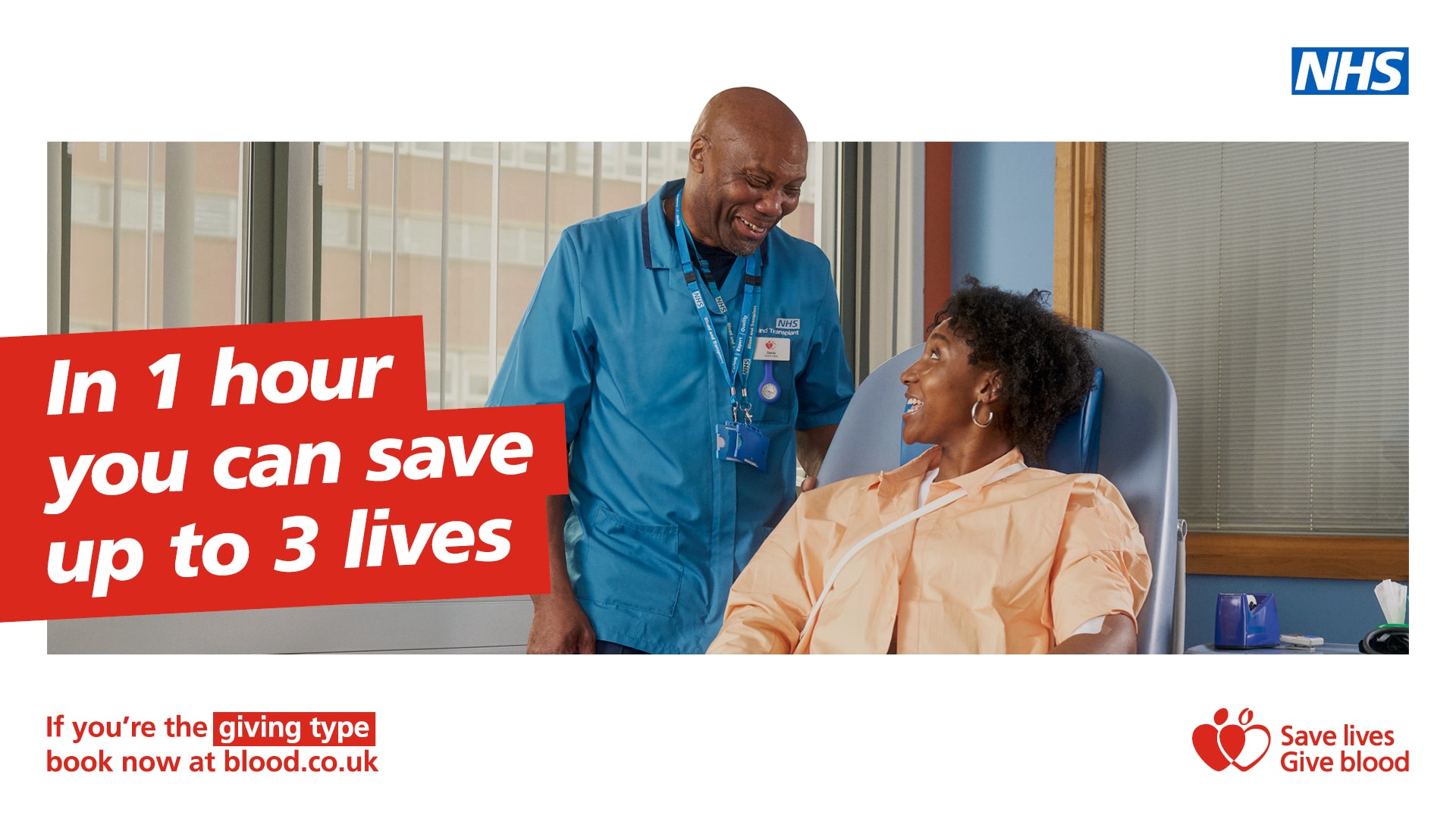
I am catching up on this thread having just donated blood.

I don't know how many units of blood are needed each week but oh so often bloodstocks in hospitals run low. More donors are needed all the time.

If you are able to give blood then please allow me to encourage you to do so. It is easy, painless and takes less time than we waste waiting for VAR decisions to go against us.

Many people who could give blood just don’t think about it or they simply reckon that someone else will do it. We do. But not enough of us.

Would you act if you or someone close to you were to need a transfusion or one of the other medical treatments that are derived from blood?

Don't hesitate. Follow the link, start the process now.


You might also be helping to save a life.
 

;